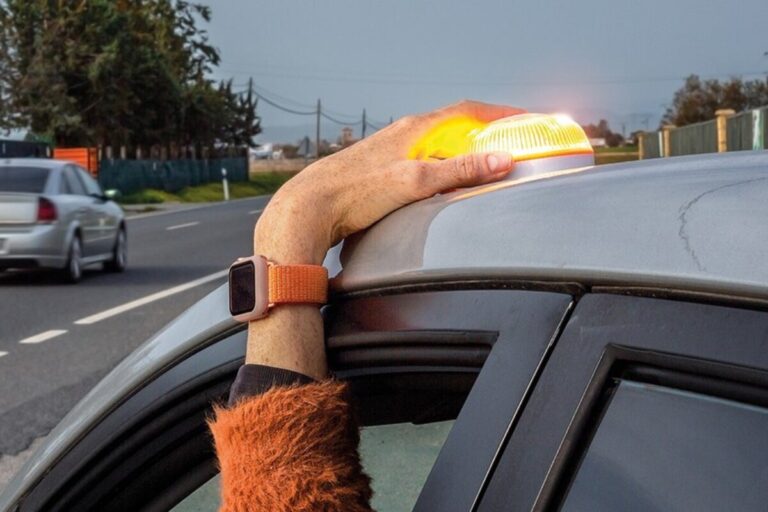
As of 1 January 2026, it will be mandatory in Spain to carry a V-16 warning light in your vehicle instead of the traditional triangle. To ensure you fully understand what you need to do to comply, Jennifer Cunningham Insurance have put together this invaluable guide.
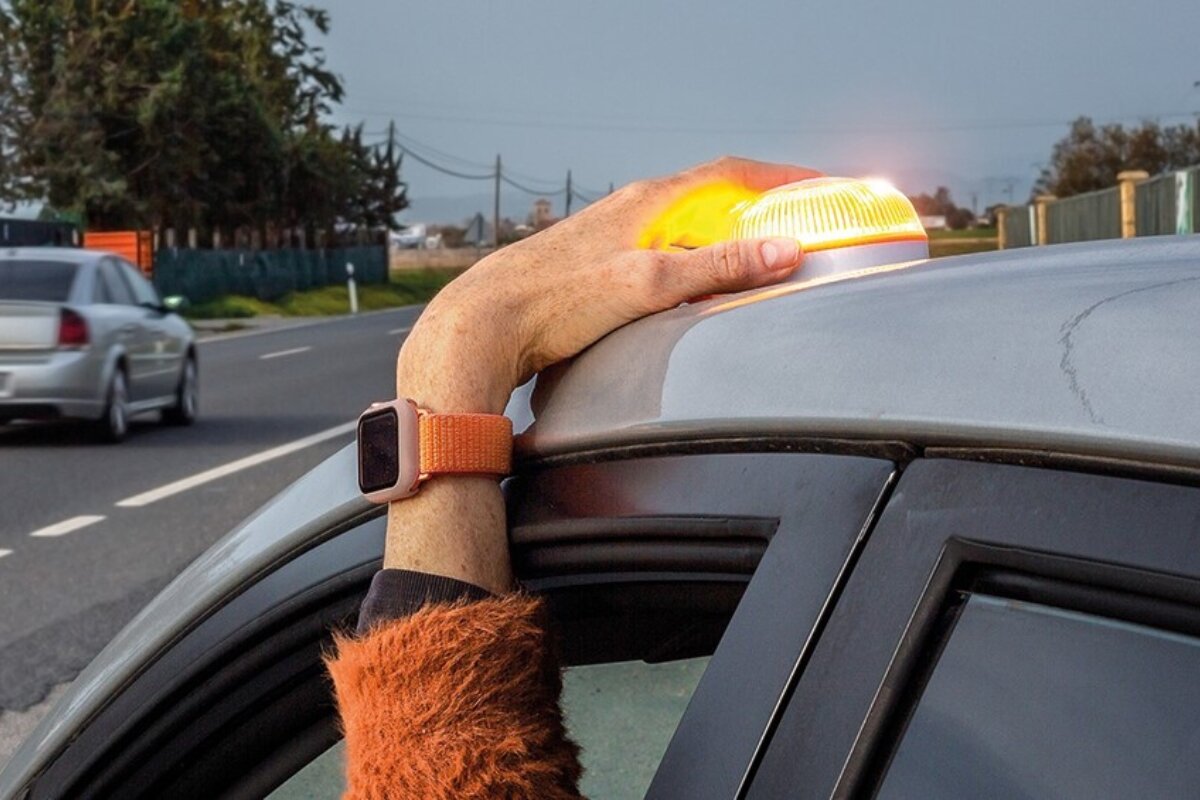
Credit: FB:SpainInThe USA
Why is Spain moving away from the safety triangle?
Firstly, while we are all very familiar with the concept of using the triangle during a breakdown, hopefully, few of us have actually had to put it into practice. In reality, using the triangle can potentially create a significant risk, especially in today’s traffic conditions.
For example, imagine having to walk at least 50 metres behind your car to place a triangle while navigating the perils of a busy motorway? Or, breaking down on a single carriageway and having to place triangles at the front and the back of your vehicle, with each one being at least 50 metres away from the broken-down car? Add to this the potential for bad weather and/or limited visibility, and it becomes clear that an alternative is needed.
In fact, in 2019 alone, 58 pedestrians died on Spain’s busier roads, many after leaving their vehicles to place a triangle or retrieve a triangle following a breakdown. For this reason, Spain’s traffic authority (DGT) is introducing the V-16 hazard warning light as an alternative. They consider it a modern, more secure option than traditional warning triangles.
How does the V-16 warning light work?
The V-16 is a compact battery-powered beacon that, when activated, flashes a bright amber light in all directions. This light can be seen from up to 1,000 metres, including in adverse weather conditions such as fog and rain, as well as in darkness. However, the most significant benefit of the V-16 warning light is that it can be utilised simply by placing it on the roof of a broken-down car.
Taking full advantage of modern technology, several V-16 models feature built-in connectivity, which automatically sends the vehicle’s location to Spain’s national traffic alert system, DGT 3.0. This means that other drivers receive information about the hazard in real-time, ensuring that they have ample advanced warning to slow down or change lanes accordingly.
V-16 warning light: A smart, inclusive solution
The V-16 warning light works with all vehicles, irrespective of the model or how old it is. It is very easy to use, and unlike the triangle, no walking is involved. This offers significant relief for everyone, and especially those who may struggle with reduced mobility. It is for these reasons that the V-16 is part of Spain’s broader Road Safety Strategy 2030, which aims to reduce road deaths by 50%.
Making the switch to the V-16 warning light
While the law comes into full effect in January 2026, it is strongly recommended to make the switch as soon as possible. This not only keeps you safer, but it also ensures that you are prepared in readiness for when it becomes mandatory to do so.
It is essential to note that to comply with this legal requirement, your chosen V-16 device must be a model with a non-removable built-in SIM card that communicates directly with DGT 3.0, ensuring your location is transmitted automatically in the event of a vehicle breakdown.
To help their clients prepare, Jennifer Cunningham has put together a helpful list of government-recommended V-16 devices that meet this legal requirement. To learn more or to request the approved list, visit www.jennifercunningham.net or email info@jennifercunningham.net
At Jennifer Cunningham Insurance, your safety is their priority. They are committed to keeping their clients informed about changes that matter. Updates, tips and client support are also available by connecting with them via Facebook and Instagram.
Jennifer Cunningham Insurance
Website: www.jennifercunningham.net
Email: info@jennifercunningham.net
Phone: +34 966 46 16 90
Offices: Javea, Benijofar